

Letter to our stakeholders
from Cargill Board Chair and Chief Executive Officer Brian Sikes
Agriculture’s defining challenge has always been ‘more’ — more people, more crops, more food. And for generations, we’ve met that challenge with productivity. Better inputs and innovation. Improved logistics. Relentless efficiency. And it worked. The world now produces more food than at any point in human history.
Still, 670 million people are hungry. Volatility is the new norm. Trends we thought were true yesterday are rapidly shifting today. And the future of food has become profoundly more complex than simply ‘more.’ Feeding our future depends on strengthening the networks that keep food moving. That's a role Cargill was uniquely built to play. With 161 years of experience and genuine conviction about what's ahead, we’re determined to listen intently, collaborate broadly and grow forward.
Helping farmers
grow
Through technology, agronomic support, market access, animal nutrition and supply chain connections, Cargill helps producers strengthen their operations and grow with confidence. Whether it's digital tools that sharpen decision-making, feed solutions that improve animal health or programs that reward more resilient practices, Cargill is helping farmers turn complexity into opportunity. When farmers succeed, food systems grow stronger, creating more opportunities for communities, customers and the world we nourish.

Using precision nutrition to support animal productivity
Challenge
For animal farmers, every feed decision affects the health, productivity and performance of their herd or flock.
Approach
Cargill is advancing precision nutrition to help producers make decisions with greater confidence, turning microbiome science, animal health expertise and real-time data into practical solutions for the farm.
- Scott VonGuten manages feed decisions daily for 2,200 dairy cows on his Ohio farm. Getting those decisions right — across health, productivity and cost — depends on science that Cargill's Micronutrition & Health Solutions team is advancing through gut microbiome research. Their work translates directly into practical nutrition solutions for producers like Scott.
- Cargill MaxiNIR MAX brings greater precision to feed production, using near-infrared light to scan ingredients in real time and help feed producers adjust formulations directly on the production line. That supports more consistent nutrition for farmers and their animals.
- To reach more farmers, Cargill is making major upgrades to our micronutrition production facility in Engerwitzdorf, Austria, and a state-of-the-art dairy feed plant under construction in Punjab, India. These efforts are expanding our production capacity — by up to 400,000 metric tons in Punjab — to hep meet growing demand for advanced animal nutrition.
Impact
Together, innovations like these help animal farmers make more informed nutrition decisions that support healthier animals and strengthen farm performance.
Helping customers grow
Consumer choices are reshaping the food system and creating new opportunities for companies that can move with speed, insight and confidence. With consumer insights, ingredient expertise, protein capabilities and global supply chain connections, Cargill helps food manufacturers, restaurant brands, retailers, processors and entrepreneurs turn change into advantage. Together, we move from insight to action, creating new products, stronger businesses and more opportunities across food systems.
Expanding our reach to grow with customers
Challenge
As populations grow and economies shift, customers need partners with the scale, reach and marketing insights to help them move with confidence and access new opportunities wherever demand is heading.
Approach
Cargill is investing in the capacity, infrastructure and capabilities customers need for the markets ahead.
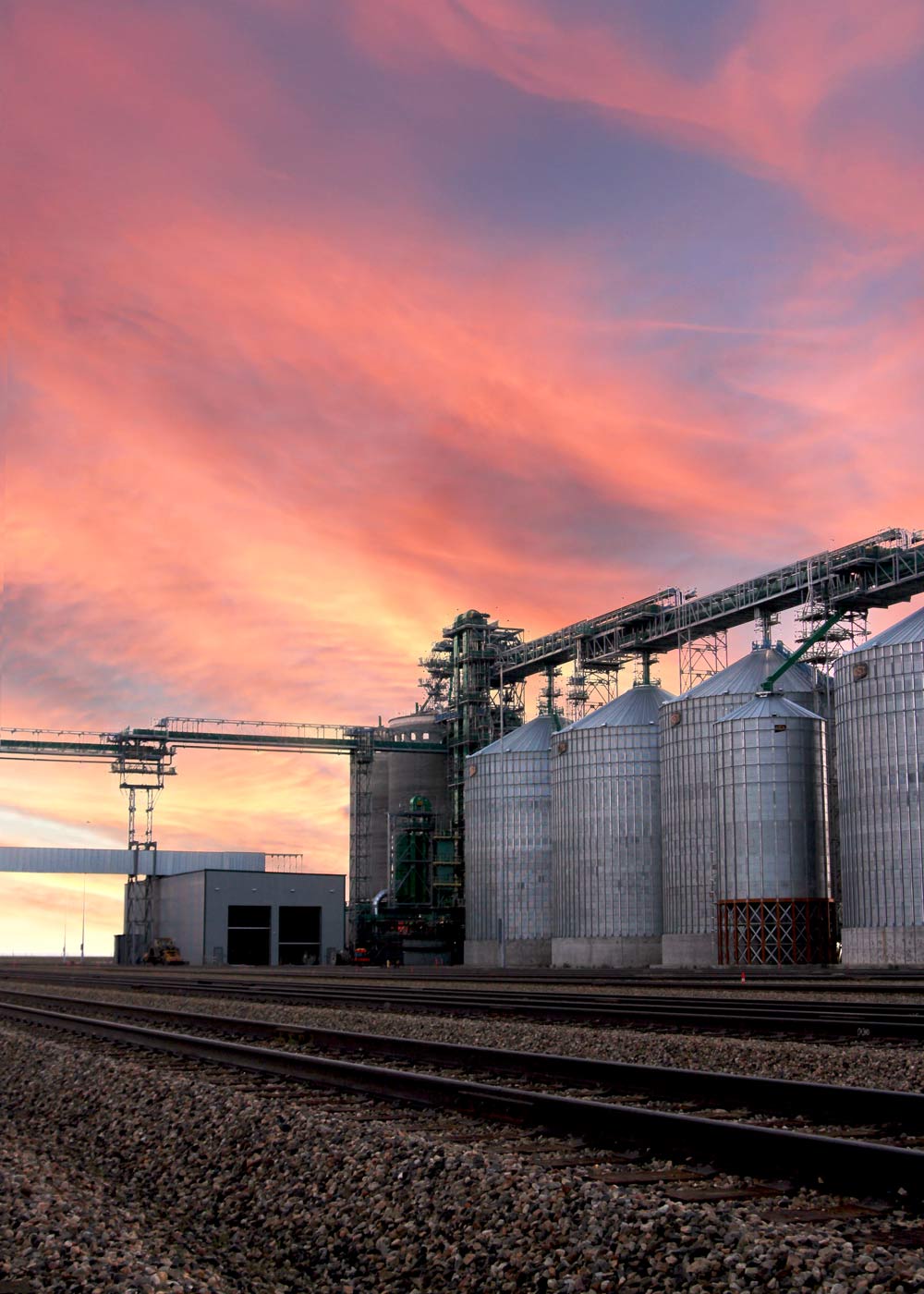
This year, we opened a new canola processing facility in Regina, Saskatchewan, with an annual processing capacity of 1 million metric tons. The new facility strengthens Cargill’s ability to serve customers and capture new opportunities in food and renewable fuels.
In ocean transportation, our innovative fleet of dual-fuel vessels is extending Cargill’s shipping capabilities, demonstrating a pathway to lower-emission transport and offering customers potential CO2 savings of up to an estimated 70% by using green methanol, a lower-carbon alternative to conventional marine fuels.
In Malaysia and China, we’ve invested in specialty fats and food ingredients that are deepening our presence in fast-growing markets and enabling innovative solutions for our customers.
Impact
Together, these investments are helping customers access growing markets, meet evolving demand and move with greater confidence into the future.
Helping people
grow
As technology transforms how food is made and moved, the skills needed to support food systems are changing, too. Communities are changing with it, and so is the next generation of talent who will help shape the future of food and agriculture. Through employee development, modernized operations and investments in the places where we live and work, Cargill helps people grow with the food systems they support. Because when people grow, our food systems grow stronger.

Keeping our people and products safe
Challenge
As food systems grow more complex, Cargill teams need tools that help them solve problems, make decisions, work safely and deliver safe, quality products every day.
Approach
Across our operations, Cargill is modernizing how food is made, moved and delivered. Automation, robotics, artificial intelligence and advanced analytics are helping teams work more safely, efficiently and effectively, while building the skills needed for the future.
At our Amsterdam multiseed crush and refinery facility, teams use Spot, an AI-powered robot dog to perform daily inspections — helping identify potential maintenance issues and safety risks before they become larger problems. Digital tools are strengthening how employees manage complex operations, too. Our food safety teams use the Cargill Hazard Alert System™ to look for potential issues early, combining machine learning with human expertise. Last year, the system monitored nearly 1 million signals and triggered hundreds of investigations, helping teams address potential risks before products reached customers.
Impact
By combining human expertise with advanced technology, Cargill is creating safer workplaces and processes, stronger teams and more opportunities for people to grow as operations evolve. Together, we keep the food system moving.
Take the report with you
Explore the complete Annual Report offline.
FAQ
What is Cargill's 2026 Annual Report about?
Cargill's 2026 Annual Report, Grow Forward, covers the company's strategic progress across three pillars: helping farmers grow, helping customers grow and helping people grow. CEO Brian Sikes outlines how Cargill is using AI, farmer partnerships, customer co-innovation and workforce development to address global food system complexity. The report also covers Cargill's operating transformation, safety efforts and community investments across 70 countries.
How is Cargill using artificial intelligence in agriculture and supply chain operations?
Cargill has been actively integrating AI across its operations for more than a decade — in supply chain efficiency, product innovation, frontline safety, and farmer decision support. Studies predict AI could generate $40–70 billion in additional productivity for food and agriculture annually. Cargill is using AI to predict grain volumes, optimize port logistics, formulate new products, support frontline worker safety and more.
How does Cargill support farmers around the world?
Cargill supports farmers around the world by connecting them to markets, precision nutrition, digital tools, agronomic expertise and more. Programs like the 1000 Farmers Endless Prosperity initiative in Türkiye have delivered average yield increases by approximately 26% and profitability increases of up to 39% in 2024. Cargill also provides digital platforms like REVEAL™ Layers and Flockwise™ that give animal farmers real-time insights and data-driven decision support.
How is Cargill helping customers respond to changing food trends?
Cargill partners with food manufacturers, restaurant brands, retailers, processors and entrepreneurs to anticipate and respond to shifting consumer preferences – from protein personalization to GLP-1 driven dietary changes and growing demand for sustainable ingredients. Cargill co-innovates with customers, delivers unique consumer insights and engages AI-powered tools to accelerate product development.
Which companies recognized Cargill as a supplier or strategic partner?
Some of the world's largest food companies have recently recognized Cargill as a top supplier and strategic partner. These include McDonald's (2026-27 Supplier of the Year and North America Food Safety Award), PepsiCo (2025-26 Supplier of the Year), Sysco (U.S. Sustainability and Supply Chain Supplier of the Year), and Jollibee (Gold - Champion Partner of Joy, 2025 and 2026), among others.
How is Cargill strengthening food supply chains?
Cargill strengthens food supply chains through investments in logistics infrastructure, digital forecasting and sustainable transportation. The company operates dual-fuel vessels capable of running on green methanol, with up to an estimated 70% potential CO2 savings, and has expanded processing facilities in Saskatchewan, Canada; Nantong, China; and Saint-Nazaire, France.
How is Cargill keeping its people and products safe?
Cargill combines advanced technology with human expertise across its operations. Through automation, artificial intelligence, robotics and tools like the Cargill Hazard Alert System™, Cargill identifies potential safety and food quality risks early, creating safer workplaces, strengthening food safety and delivering high-quality products customers can trust.
How is Cargill investing in the communities where its employees live and work?
Cargill supports education, food security, farmer training and local opportunity through employee volunteering and strategic community partnerships. Over the past year, Cargill contributed more than $95 million and nearly 51,000 volunteer hours, helping expand access to education, provide millions of meals and strengthen farming communities around the world.
How is Cargill investing in developing its people?
Cargill is investing in the skills, technology and opportunities employees need to succeed in a rapidly evolving world. From modernizing operations with automation and AI to creating safer workplaces, supporting continuous learning and empowering employees to innovate, Cargill is helping build the next generation of talent while investing in the communities where its people live and work through education, volunteering and local partnerships.
