
Connecting farmers to the world: Cargill’s global waterways in action
Key Takeways
- Much of the world’s rising population is located far from where food is grown, and farmers need help getting it to them.
- From inland waterways to the high seas, Cargill’s integrated network of grain terminals, ports and ships connects agricultural crops to customers worldwide.
- Cargill’s investments and innovations in river and ocean shipping are strengthening the resilience of the global food supply chain, boosting food security while lowering emissions.
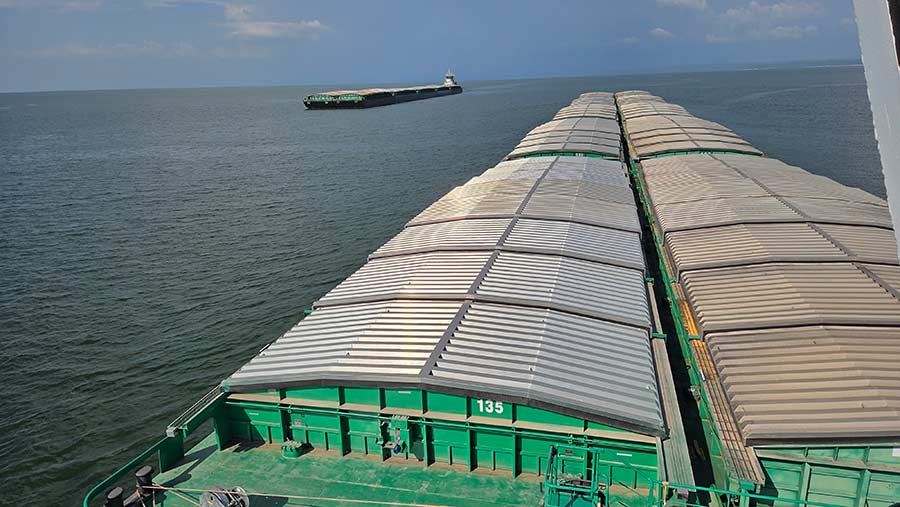
Morning mist hangs low over Brazil’s Tapajós River as a pusher boat eases a line of barges away from the port of Miritituba, in the North of Brazil.
Onboard, a Cargill team guides 10 barges carrying 30,000 metric tons of corn grown hundreds of miles inland. Within days, this grain will leave the river behind, cross an ocean and help feed people on the other side of the world.
This journey — from river to port to open sea — is repeated thousands of times each year. The voyage along the Tapajós River illustrates how important waterways are for efficiently moving food. It’s the country’s largest grain export corridor. As Brazilian agriculture has grown in recent years, the river connects Brazil’s increasingly productive farms with consumers on the other side of the world.
At the heart of the global food flow
Carrying food and other goods along waterways is a story as old as human civilization. Waterways power the global food system, acting as the backbone of international agricultural trade. With the global population approaching 9 billion, the world’s rivers and oceans are as critical as ever to nourishing the world. That’s because much of the world’s most fertile farmland is located far from fast-growing population centers.
Cargill operates a vast integrated network of grain terminals, river and ocean ports, and shipping vessels that connect farmers' harvests with global customers.
At the heart of this global flow, our people and infrastructure play a critical role in keeping food moving safely, reliably and more sustainably.
Rafael Albernaz, Cargill’s fleet manager for the operation in Brazil, stands on the deck of the pusher boat, helping the pilot navigate around other vessels and areas of shallow draft as they head downstream. The convoy of barges is headed toward Santarém, about 280 kilometers away. From there, the grain will be transferred to an ocean-going vessel bound for global markets, largely to support animal feed and, ultimately, protein production.
“These are busy riverways with a high demand for grain. So, we plan meticulously to ensure we depart and arrive safely,” Rafael explains.
Waterways like the Tapajós River effectively connect Brazil’s agricultural production directly with global markets, significantly impacting worldwide grain supply chains. Cargill continues to strengthen this connection with strategic investments, such as expanding storage capacity to 60,000 tons in Porto Velho with the construction of a new terminal, adding advanced unloading equipment, and increasing grain handling capacity by 20% at Santarém. Alongside these improvements, Cargill has innovated ways to safely move a larger number of barges at once, making voyages like this one even more efficient.
Port infrastructure on the Great Lakes links Canadian farmers to international customers
Thousands of miles north, another part of the waterborne food supply chain is at work on Lake Huron in the Canadian province of Ontario.
Much of the Americas are a net exporter of grain, such as corn, wheat, canola and soybeans, making this region an integral part of the global equation to get the world the food it needs.
The Great Lakes and the St. Lawrence Seaway System act as a bridge, combining to form the longest deep-draft navigation system in the world, which extends 3,700 kilometers from the heart of North America to the Atlantic Ocean.
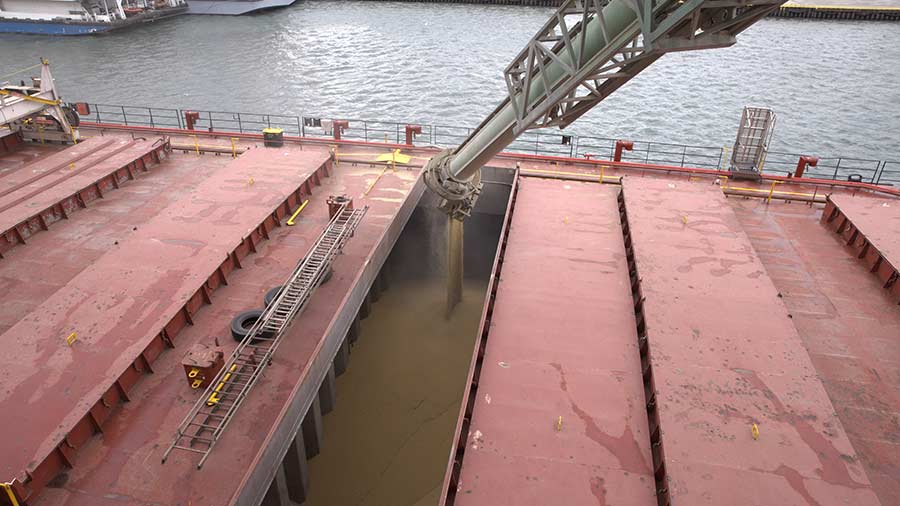
At our grain terminal in Sarnia, Canada, plant manager Ryan Lefebvre and his team load the crops grown on Ontario’s farms into ships bound for international ports.
“Our local farmers can’t deliver their crops around the world themselves,” Ryan says. “I’m incredibly proud of the team we have at Cargill Sarnia. Cargill’s purpose is nourishing the world, and they understand they’re part of that. It’s not hyperbole.”
The Sarnia facility directly supports Ontario’s farmers, allowing their crops to reliably reach global markets. Its 50 Cargill employees handle approximately 35% of Ontario’s grain exports. Every day, dozens or even hundreds of trucks deliver grain to the terminal. Cargill employees analyze, sort, store and load it onto boats, even when the weather is less than cooperative.
The Cargill facility has been operating on the Sarnia waterfront for nearly a century. For assistant supervisor Avery Duncan, that history is personal.
“I grew up fishing with my dad near this terminal,” Avery says. “Now I help keep it running so food grown by our community can reach the world.”
Avery and his team of certified electricians, millwrights and technicians keep the facility running smoothly and safely, ensuring Canadian grain moves efficiently from inland farms to international customers — another essential step in the global journey of food.
Cargill’s ocean shipping innovations reduce emissions while moving food
Once grain leaves river systems and ports like Santarém and Sarnia, it merges into a global ocean network that carries over 80% of international trade, according to the U.N. In other words, ocean shipping keeps economies moving and people fed.
Cargill Ocean Transportation is one of the world’s largest charterers of dry-bulk vessels, transporting more than a million metric tons of agricultural commodities each week across its fleet of about 640 vessels. As demand for food grows, the world needs to reduce the environmental footprint of moving it — and Cargill Ocean Transportation is focused on doing just that.
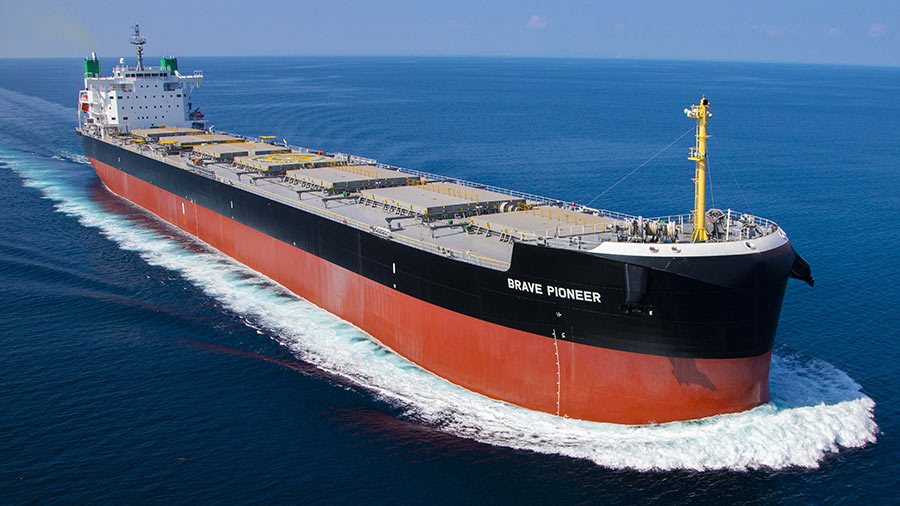
The Brave Pioneer recently joined Cargill’s fleet and is the first of five dual-fuel vessels chartered by Cargill that can run on both conventional marine fuel and green methanol, a high-emissions savings fuel. By testing innovations like green methanol vessels, Cargill is exploring ways to lower shipping emissions, with the aim of enhancing the resilience and sustainability of global food distribution.
It’s the latest example of how the company is experimenting to decarbonize maritime shipping.
“The world needs ocean shipping, and making ocean shipping more sustainable is core to our business,” says Jan Dieleman, president of Cargill Ocean Transportation. “These methanol vessels are the latest milestone on our journey to innovate, test and scale low-carbon solutions for our customers.”
The Brave Pioneer’s maiden voyage includes transporting canola from Australia to Belgium. Along the way, the vessel’s crew is working with our operations team to learn how best to maximize the vessel’s contribution to reducing emissions across the agriculture, energy and shipping sectors.
Looking ahead, Cargill will continue to invest in advanced infrastructure and innovative shipping technologies, scaling sustainable practices, and testing new solutions to further enhance the efficiency and resilience of global food supply chains.
“It’s exciting to see these bold new technologies out on the water, moving cargo and making an impact,” Jan says. “It takes years of investment, risk and innovation with our partners to make this happen, and we’re proud to play our part.”
An integrated waterways network strengthens global food security
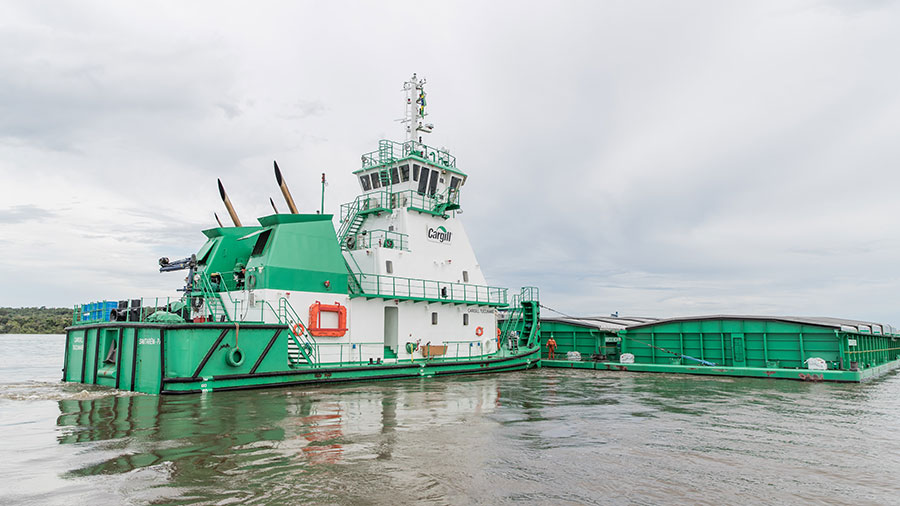
Thirty-six hours after leaving Miritituba in Brazil, the Cargill barges arrive at the port of Santarém. Rafael and the crew of 10 ease the convoy into position, completing one leg of the grain’s long journey.
Like the teams in Sarnia and the crews navigating ocean routes around the globe, they are part of a connected chain — people working across rivers, ports and oceans to move food safely and reliably from one side of the world to the other.
“Our responsibility here is quite significant, right?” Rafael reflects as he stands aboard the barges. “We take great care to always do our best.”
We understand that when it comes to nourishing a growing world, these rivers, ports and oceans are essential. The company is innovating and investing to keep farmers connected to markets and food to communities worldwide — supporting a more resilient, secure and sustainable global food system.
More sustainable shipping
We’re making shipping safer and more responsible with less impact on the environment.
