
Reinventing tomorrow’s food system: 3 innovation trends shaping the future of food R&D
 Florian Schattenmann is Cargill’s chief technology officer. In this article he shares three trends defining the horizon of food R&D and why innovation leaders must embrace agentic and generative AI, next-generation fermentation and precision nutrition to remain relevant.
Let’s be real — disruption isn’t the exception anymore; it’s part of daily life. Whether it’s shifting supply chains or rapidly evolving consumer expectations, staying still isn’t an option. Against this backdrop, shifting how we innovate is critical to continue shaping how food is developed, produced and delivered in our changing world.
There’s no silver bullet when it comes to food innovation. Progress will not be defined by a single discovery, but by how effectively companies collaborate across the food ecosystem, embrace AI, apply breakthroughs in biological science and more closely align to consumer expectations.
Looking ahead to 2030, three innovation trends will define the future of food R&D and determine which companies remain relevant in a faster, more adaptive food system.

1. Generative and agentic AI are changing how we innovate with speed, collaboration and scale.
AI has hit the food and ag space, and it’s here to stay. According to McKinsey’s 2025 analysis, AI could unlock up to $560 billion in annual economic value by accelerating R&D across all industries. In food R&D, where we lean heavily on intellectual property, AI has the potential to roughly double the pace of innovation.
At Cargill, we’re applying AI across the full innovation journey — from discovery to commercialization — grounded in well-governed scientific and operational data. Our AI-enabled pipeline supports customer co-creation, modeling, reformulation, recipe creation, faster concept development and even more efficient production.
In practice, this means:
- Faster, smarter experimentation. AI can compress the experimental discovery runway by predicting which microbial strains or fermentation conditions are most likely to produce a desired molecule. This helps our scientists focus their time and resources where they create the most value.
- New (and faster) ways to co-create with customers. Generative AI is reshaping how we innovate with customers. Cargill’s AskEmma, our AI-enabled ideation platform, draws on a large repository of historical R&D concepts, trend data, consumer insights, research and testing feedback to accelerate brainstorming, discovery and new product development.
- More efficient production. AI, combined with computer vision technology, is reducing food waste and strengthening production efficiency. CarVe, Cargill’s patent-pending AI and computer vision system, measures red meat yield in real time, helping employees refine each cut so more protein stays in the food system.
This portfolio is now being extended by agentic AI — systems that can reason through decisions, adapt to changing conditions and execute tasks within defined guardrails. In R&D, agentic AI “coworkers” are beginning to support Cargill’s technical teams and product formulators by accelerating research and design cycles, and strengthening cross-industry collaboration.
This isn’t about replacing human insight; it’s about amplifying it for more impact. We’re combining deep domain expertise with AI fluency to continue shaping the future of food.
As with earlier technology shifts, the full potential of AI will only be realized if we redesign process flows end-to-end. Otherwise, bottlenecks simply move to different parts of the R&D pipeline. The companies that embed AI in R&D and business strategy — through process, strong governance and a shared culture that treats AI as a daily habit — will create a lasting strategic advantage.
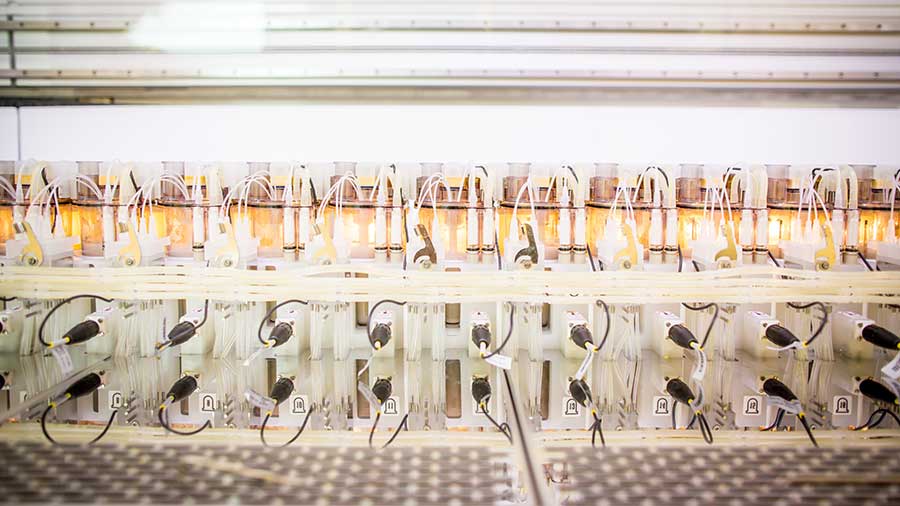
2. Next-generation fermentation is expanding the ingredient toolbox for food R&D.
Fermentation has been around for centuries, but we’re just scratching the surface of what it can do. Today’s capabilities in scale, precision and efficiency are unlocking entirely new possibilities that didn’t exist even five years ago. Traditional, biomass and precision fermentation are expanding the ingredient toolbox for food R&D, enabling improved functionality and cost efficiency.
With more than 30 years of experience and more than $2 billion invested, Cargill views fermentation as a high-impact arena of innovation for the future. In fact, the global fermented food and ingredients market is projected to keep expanding, reaching anywhere between $100-$170 billion by the mid-2030s, reflecting its growing role across categories.
For example:
- EverSweet® is a sweetener produced using fermentation to deliver the best-tasting parts of the stevia leaf with a fraction of the resource use.
- EpiCor®, a postbiotic supporting digestive health, is created through a proprietary fermentation process.
- Alternative proteins, built through partnerships like ENOUGH, use zero-waste fermentation to produce ABUNDA mycoprotein.
The broader trend is this: fermentation is giving food companies a wider, more flexible set of tools to build ingredients reliably and more sustainably at scale.

3. Precision nutrition is guiding the next wave of food innovation.
The next five years won’t just be about what we make, but why we make it. Consumers are more intentional than ever about what they eat and drink — not just for physical health, but for their emotional and mental well-being. While the macro trends in food remain consistent — health and nutrition, more protein and indulgence without compromise — the micro trends are overlapping and quickly evolving.
These are the trends reshaping consumer expectations across every store and aisle.
- Seeking goodness: a more informed, benefits-driven consumer. Consumers are actively seeking foods that support every aspect of their health. Cargill’s TrendTracker, our proprietary view into the evolving world of food and beverage, highlights that 61% of North American consumers say they’re eating more protein. Growing segments around the world are also seeking fiber and functional foods supporting digestion, gut health and mood. AI-assisted formulation and fermentation will help deliver on these expectations without compromising taste or scalability.
- Eating to live: adding years to life and life to years. From Gen Z to Boomers, up to three-quarters of consumers believe food and beverages can support active aging, longevity and everyday wellness. This is driving demand for R&D to deliver functional ingredients, protein variety, sodium reduction and convenient formats that are easy to integrate into daily routines.
- Indulging: enjoying without guilt or compromise. People want to enjoy what they eat. Our research shows nearly 90% of consumers indulge — through snacks, chocolates or other treats — and when they do, they want it to be worth it. Innovation must deliver against consumer expectations for taste, making a positive sensory experience non-negotiable.
- Spending with intention: balancing elevated value and experience. Consumers are redefining value, balancing a desire for novel experiences and global flavors with affordability. As consumers make trade-offs, the innovation opportunity is to deliver options that feel “worth it,” whether that means a better flavor experience, “splurge-worthy” quality or a lower price point.
Looking ahead: innovation as a habit, not a headline.
The companies that lead the next era will be the ones that embed innovation in how they operate — across technology, science and culture — with a steady pulse on the result. As I’ve said before, innovation only matters if it delivers impact at scale.
At Cargill, we’re not just watching these trends, we’re helping shape them. We’re scaling what works and building the capabilities required for the future. And if we keep pushing with purpose and speed, we won’t just keep up — we’ll help redefine how the world experiences food by 2030 and beyond.
Innovation at Cargill
From idea to impact, we innovate to reimagine what's possible.
