
Poultry solutions
Whether you are producing, or supporting the production of, many birds a week, or managing a smaller operation, you really need to know that our solutions are evidence-based as well as innovative. To ensure strong performance for your business and birds.
Poultry performance and productivity challenges
With poultry projected to overtake pork by 2020 as the leading source of protein worldwide, the industry needs to deliver greater quantities of meat, more quickly. Meeting changing consumer expectations and mitigating risk for food safety and quality, all while reducing the use of antibiotics, is also a challenge. No matter how many birds per week you are producing, you can depend on our innovative, proven solutions to support bird performance.
Because only 3 percent of the poultry population qualify as breeding stock, the tendency is to look at the same nutritional solutions for breeders as for broilers, although they have very different performance objectives and a far longer lifecycle. Layers also have a longer lifecycle and have specific nutritional challenges that have to be met to ensure egg quantity and quality.
Custom feeding solutions
Factors such as harvest conditions, storage, and processing can greatly impact the nutrient levels and digestibility of feed ingredients, yet you need exact nutritional values for your animals to ensure maximum performance and profitability. Whether you are looking for complete feed, premix or concentrates, we combine practical knowledge with scientific precision to ensure that our solutions meet your birds’ exact nutritional needs:
- 500+ research and development professionals, 200+ of who are PHDs
- 30 Near-Infra-Red (NIR) experts, along with NIR machines around the word and a global ingredient database of more than 2 million samples per year
- 14 wet chemistry labs
- 15 Technical Application Centers
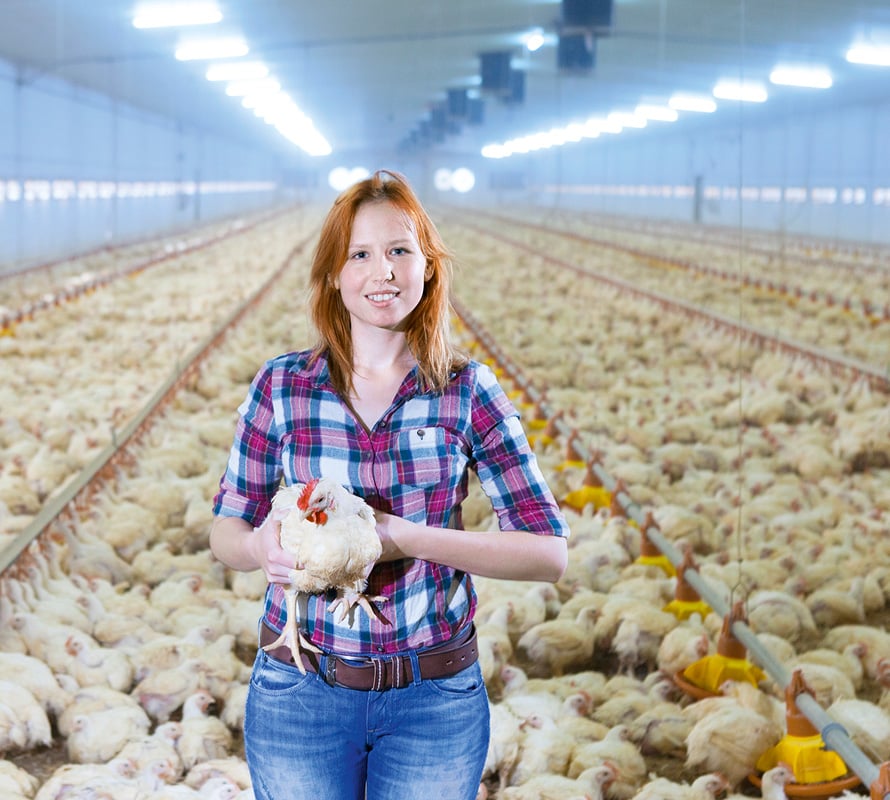 Our solutions are tailored to meet your bird’s exact nutritional needs. Central to our nutritional solutions is the Cargill Nutrition System. This uses big data analysis and tools to mine information from the world’s largest database of nutrient samples, cutting-edge research from our innovation teams, and internal know-how in feeding animals and formulating diets. Information on ingredient availability, diet content and cost – as well as specific customer data – are all modelled with the help of our skilled nutritionists into multiple feeding scenarios with a ‘what if’ feature to help us guide you towards the best plan. We use best-in-class modeling and business scenario planning tools such as the MAX™ System for Broilers and TechBro Flex™, and in-depth ingredient analysis tools such as REVEAL® .The result is more precise, nutrient–driven feed formulations which, in turn, improve predictability of performance and deliver more consistent economic returns and afford more consistent financial returns.
As well as broilers, breeders and layers, we offer precision feeding solutions for turkey, game birds, duck, backyard chickens and other poultry sub-species. Please contact us for more details of these offerings. -Best-in-class feed additives To further enhance bird feed performance and your profitability, we offer the following best-in-class feed additives:
- Biacid™, an additive blend of stabilized essential oil compounds and organic acids specifically selected to improve efficacy of feed
- Provimax® blends of carefully selected short-chain fatty acids designed to support high quantity and quality of egg production through support of liver and intestinal-wall functions.
- Proviox™, a specific blend of nutritional antioxidants that reinforces the nutritional antioxidant status of the bird
- Enzae™, enzymes that improve nutritional values of ingredients and feed
We also offer Notox™, a range of solutions (both feeding programmes and a unique online risk management tool, Notox™ Online, that uses data from the world’s largest pattern database to support bird performance under mycotoxin challenge conditions.
Poultry Health Services
Galleon™ Broiler Microbiome Intelligence
Navigate your flock to better health with Galleon Microbiome Intelligence. This patent-pending analysis tool allows broiler producers to determine the microbiome fitness of their flock, allowing decisions to be science based.
Panorama™ - Broiler Scenario Planning System
Panorama™ is a flexible scenario planning system that helps poultry companies make confident decisions for the best economic results of the entire broiler operation.