
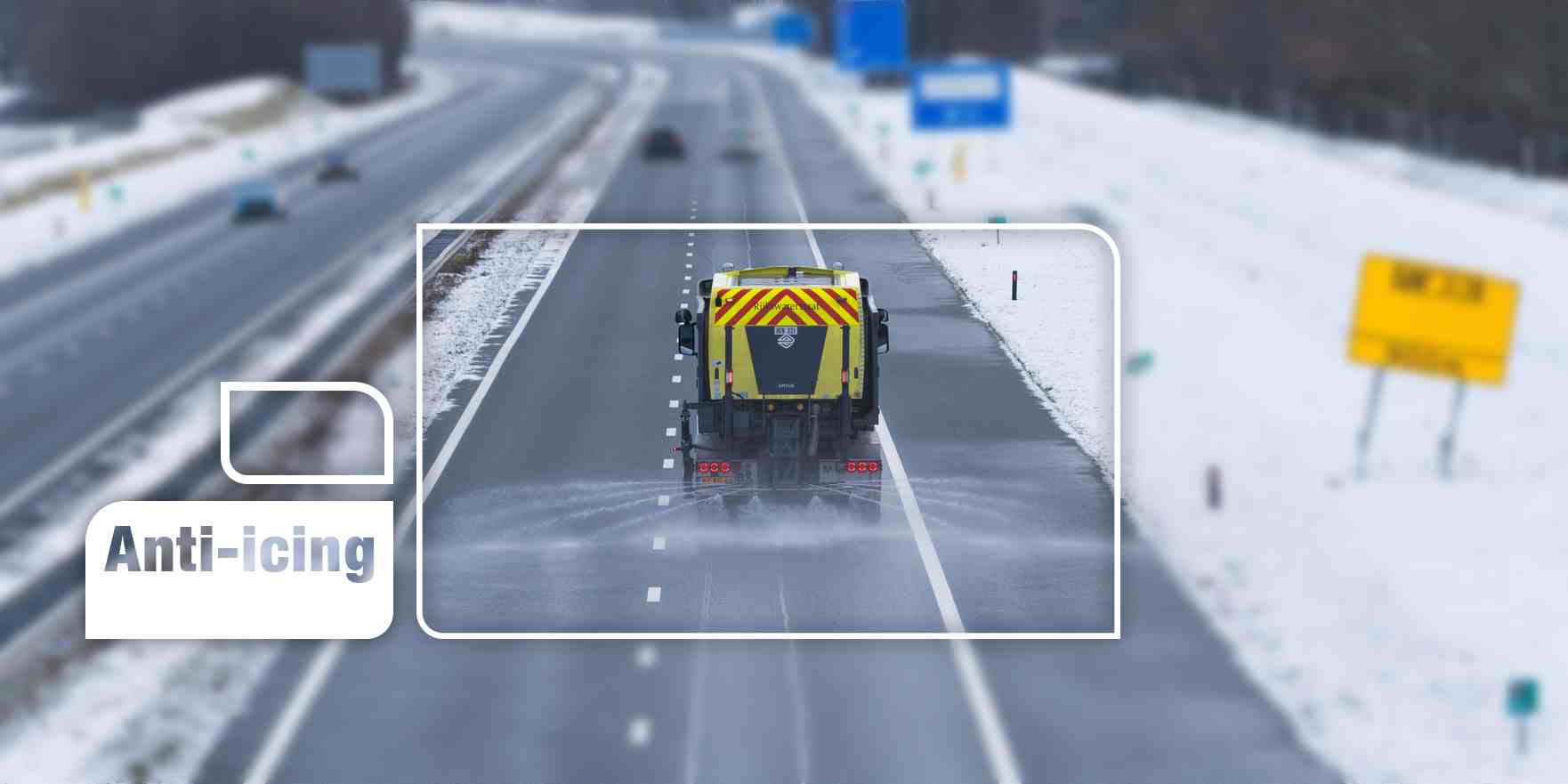
What Do They Spray on Roads Before Snow?
This method can cut cost of maintaining safe roads by 90% compared to traditional deicing.
A proactive approach to winter storms, anti-icing is the practice of applying brine before precipitation to prevent the development of bonded snow and ice on the road surface. Salt brine is effective to -6 degrees Fahrenheit and is a proven anti-icing agent. By spreading freezing point depressant materials before a storm, it is possible to prevent the bond from forming between the roadway and snow or ice. The water part of the brine evaporates, and the salt that remains helps prevent ice from forming a bond with the roadway. Salt brine also adheres to the roadway and is not blown off by vehicles driving on the road.
Research has shown that timely applications of anti-icing materials can cut the cost of maintaining a safe road surface by 90 percent compared to traditional deicing. Advantages of spraying brine before storms include a faster return to normal road surfaces, a reduction in airborne salt particles, a better application to roadway surfaces, increased efficiency in snow and ice removal resulting in less deicer and manpower. In addition, salt needs to be moist to be effective, and applying brine accelerates the melting process.
However, anti-icing is not a silver bullet, and it is not an effective approach when a winter storm is forecast to start as rain as rain will wash the material away or when enough salt residue from a previous storm remains.
To learn more and to review our complete anti-icing and brine making portfolio, visit our website or call 1-800-600-SALT (7258). Any question about winter maintenance or our products be sure to Ask. Dr. Scott!
Sources:
Salt Institute “The Snowfighters Handbook: A Practical Guide for Snow and Ice Control, 40th Year Edition” Go to: https://idot.illinois.gov/Assets/uploads/files/Transportation-System/Manuals-Guides-&-Handbooks/T2/L026%20The%20Snowfighters%20Handbook.pdf
https://www.penndot.gov/TravelInPA/Winter/Pages/Winter-Operations.aspx
Kansas Department of Transportation, “Managing Snow and Ice.” Go to: https://www.ksdot.org/PDF_Files/SnowandIceEfforts.pdf