
skip to main content
Cargill Logo
Cargill
  • About Cargill

    About Cargill

    • Our approach
    • Cargill at a Glance
    • Executive Team
    • Innovation
    • 2025 Annual Report
    • Our History
    • Community Engagement
    • Research & Development
    • Diversity, Equity and Inclusion
    • Workplace Safety
    • Ethics & Compliance
    • Supplier Central
    • Contact Us
  • Our Stories
  • Products & Services

    Products & Services

    • Agriculture
    • Animal Nutrition
    • Beauty
    • Bioindustrial
    • Foodservice
    • Food & Beverage
    • Industrial
    • Pharmaceutical
    • Meat & Poultry
    • Risk Management
    • Supplements
    • Trade & Capital Markets
    • Transportation
  • Sustainability

    Sustainability

    • Supply Chains
    • Sustainability Priorities
    • 2025 Impact Report
    • Reporting Hub
  • News

    News

    • All Press Releases
    • Company Statements
    • In The News
    • Cargill Connection Newsletter
    • Cargill Subscribe
  • Careers
  • Contact
  • Worldwide
  • Contact
Home/ Products & Services/Industrial/Cargill Deicing Solutions / Does sand melt ice if it is prewet with calcium chloride?  
  • Cargill Deicing Solutions
    • About us
      • Cayuga Salt Mine
      • Supply Chain Capabilities
      • Our Commitments
    • Deicers
      • Bulk Deicing Salt
        • Bulk Deicing Salt FAQs
      • ClearLane enhanced deicer
        • ClearLane enhanced deicer FAQs
        • Costs & Savings
        • ClearLane Technology
        • ClearLane photos and media
    • Your deicing experts
      • About Dr. Scott
      • Video: Questions and Answers
    • Road Safety Knowledge Center
      • Winter Talk
    • Solutions
 
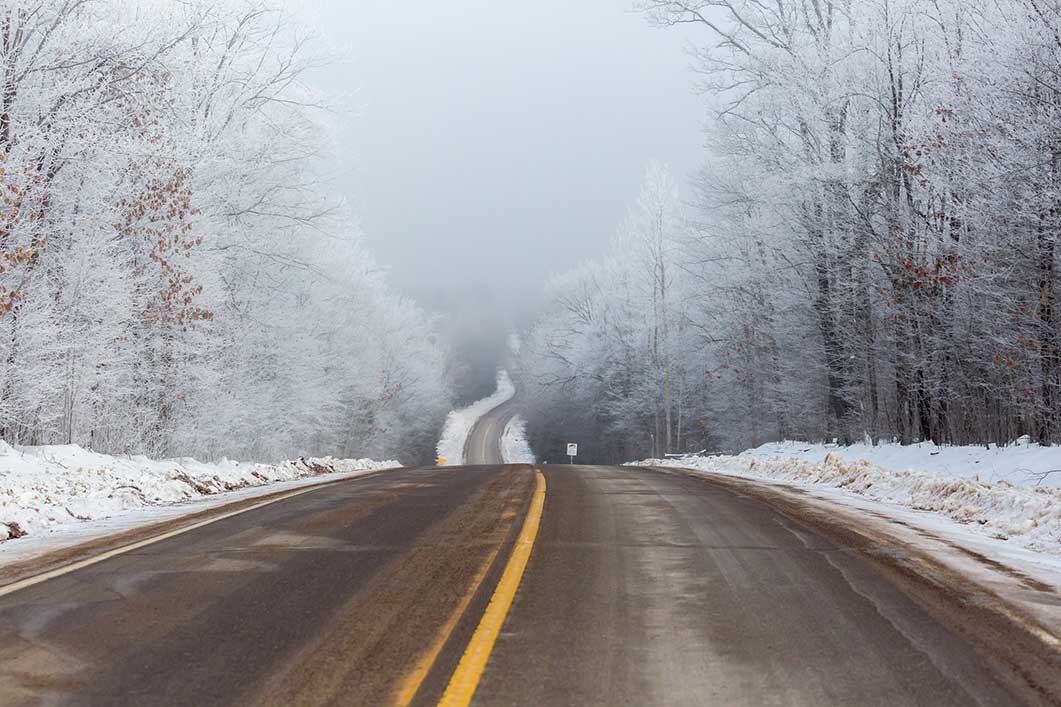
Snowy Road

Does sand melt ice if it is prewet with calcium chloride?


To the extent that there is any calcium chloride present at all, it is going to melt something. The question, of course, is just how much?  We can do a little “back-of-the-envelope” calculation to make an estimation of that, and I have done that for you here. 

Let’s assume a fairly typical sanding rate of about 1,000 pounds of sand per lane mile, and let’s assume we treat that sand with 8 gallons of a 30% calcium chloride liquid per ton.  That comes to 1.2% calcium chloride in the sand and that is equivalent to about 12 pounds of calcium chloride per lane mile or about 3.7 gallons of the liquid calcium chloride per lane mile. 

To put that in perspective for you, a typical anti-icing application rate would be between 10 and 60 gallons of liquid per lane mile.  So you can see that we are putting down really very little calcium chloride compared to even a typical anti-icing application rate.

Another thing to bear in mind is that liquid calcium chloride is going to be coating each particle of sand, so it is only going to be contacting the ice where that sand particle is touching the ice.  So we are not going to get really efficient contact between the calcium chloride and the ice from the pre-wetted sand. So the bottom line is that sand is not going to be a great way to distribute a deicing chemical on to the ice. We are not going to get very much ice melting from the calcium chloride wetted sand. 

The main value of pre-wetting with calcium chloride is going to be to prevent that sand from freezing at cold temperatures and also to help stick that sand onto the road and keep it from being knocked off by traffic action.


Linkedin Facebook Instagram YouTube
Contact Worldwide
Privacy Notices Fraud Notice
Website Terms of Use Purchase Order Terms IRM
© 2026 Cargill, Incorporated. All Rights Reserved.