
skip to main content
Cargill Logo
Cargill
  • About Cargill

    About Cargill

    • Our approach
    • Cargill at a Glance
    • Executive Team
    • Innovation
    • 2025 Annual Report
    • Our History
    • Community Engagement
    • Research & Development
    • Diversity, Equity and Inclusion
    • Workplace Safety
    • Ethics & Compliance
    • Supplier Central
    • Contact Us
  • Our Stories
  • Products & Services

    Products & Services

    • Agriculture
    • Animal Nutrition
    • Beauty
    • Bioindustrial
    • Foodservice
    • Food & Beverage
    • Industrial
    • Pharmaceutical
    • Meat & Poultry
    • Risk Management
    • Supplements
    • Trade & Capital Markets
    • Transportation
  • Sustainability

    Sustainability

    • Supply Chains
    • Sustainability Priorities
    • 2025 Impact Report
    • Reporting Hub
  • News

    News

    • All Press Releases
    • Company Statements
    • In The News
    • Cargill Connection Newsletter
    • Cargill Subscribe
  • Careers
  • Contact
  • Worldwide
  • Contact
Home/ Products & Services/Industrial/Cargill Deicing Solutions / What is Rock Salt? 
  • Cargill Deicing Solutions
    • About us
      • Cayuga Salt Mine
      • Supply Chain Capabilities
      • Our Commitments
    • Deicers
      • Bulk Deicing Salt
        • Bulk Deicing Salt FAQs
      • ClearLane enhanced deicer
        • ClearLane enhanced deicer FAQs
        • Costs & Savings
        • ClearLane Technology
        • ClearLane photos and media
    • Your deicing experts
      • About Dr. Scott
      • Video: Questions and Answers
    • Road Safety Knowledge Center
      • Winter Talk
    • Solutions
 
hero bulk deicing salt

What is Rock Salt? 

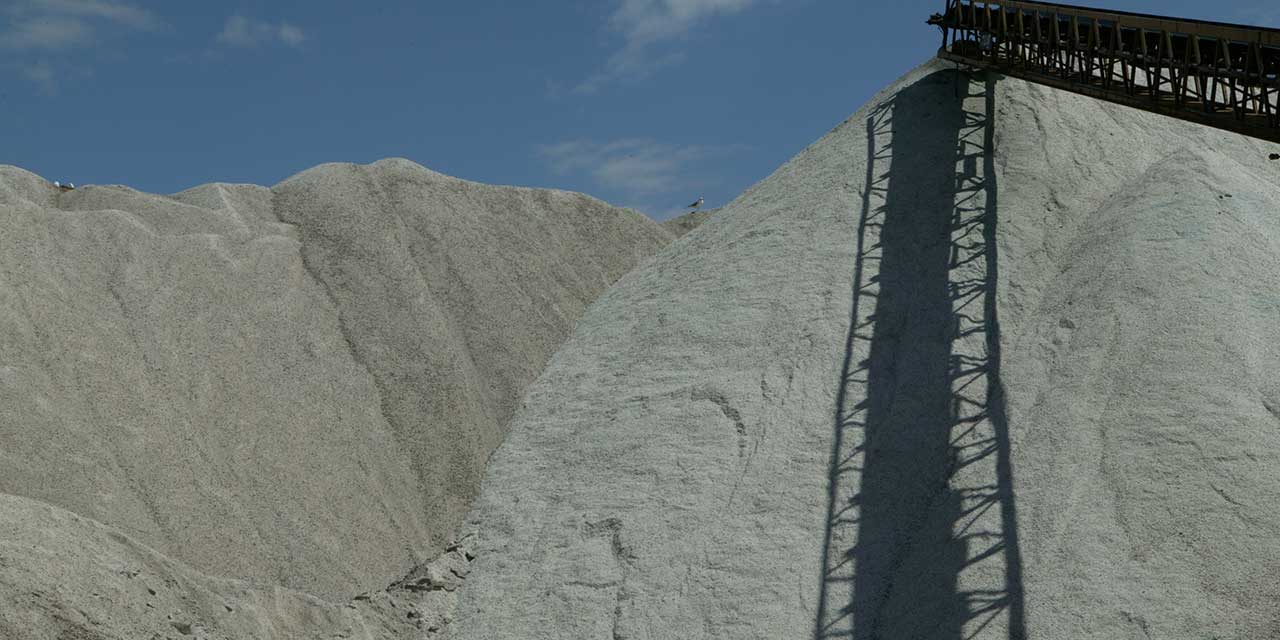
Rock salt is salt that’s taken directly from an underground salt mine.


Rock salt is the least processed form of salt. It is salt that’s taken directly from a salt mine; directly from the underground mineral deposit.  Rock salt is used just in the form is found underground.  The only processing done to it is that we crush it and screen it to get a size range of crystals that’s convenient to put down on the road.  Because of this, it’s also the lowest cost form of salt, and therefore, it’s what’s most commonly used in deicing. 

Because rock salt does not undergo any kind of chemical purification, it’s going to retain all of the natural impurities that are present in the mineral itself.  These impurities are typically going to be a few % of insoluble matter which is largely calcium sulfate, which you may know of as gypsum.  You can also get impurities from rock and shale.  

How do these impurities impact performance.  The answer is “not very much”.  It turns out that rock salt, even without any further purification, is pretty pure.  The ASTM specification for de-icing salt requires a minimum of 95% sodium chloride.  Rock salt will usually meet this purity standard without any further purification.  Rock salt purity typically varies between 95% and 99% sodium chloride, depending on which mine it’s coming from.

Linkedin Facebook Instagram YouTube
Contact Worldwide
Privacy Notices Fraud Notice
Website Terms of Use Purchase Order Terms IRM
© 2026 Cargill, Incorporated. All Rights Reserved.