
skip to main content
Cargill Logo
Cargill
  • About Cargill

    About Cargill

    • Our approach
    • Cargill at a Glance
    • Executive Team
    • Innovation
    • 2025 Annual Report
    • Our History
    • Community Engagement
    • Research & Development
    • Diversity, Equity and Inclusion
    • Workplace Safety
    • Ethics & Compliance
    • Supplier Central
    • Contact Us
  • Our Stories
  • Products & Services

    Products & Services

    • Agriculture
    • Animal Nutrition
    • Beauty
    • Bioindustrial
    • Foodservice
    • Food & Beverage
    • Industrial
    • Pharmaceutical
    • Meat & Poultry
    • Risk Management
    • Supplements
    • Trade & Capital Markets
    • Transportation
  • Sustainability

    Sustainability

    • Supply Chains
    • Sustainability Priorities
    • 2025 Impact Report
    • Reporting Hub
  • News

    News

    • All Press Releases
    • Company Statements
    • In The News
    • Cargill Connection Newsletter
    • Cargill Subscribe
  • Careers
  • Contact
  • Worldwide
  • Contact
Home/ Sustainability/... /Sustainability Priorities/Land & Water/Land/Regenerative Agriculture/“We all want the same thing – healthy food and protected natural resources.” - Anne Meis from Nebraska
  • Sustainability
    • Supply Chains
      • Animal Nutrition & Feed
      • Aquaculture
      • SeaFurther™ Sustainability
        • Source: Transforming supply chains
        • Optimize: Innovating and enhancing
        • Care: Safeguarding farmed fish
      • Sustainable Beef
      • Cocoa
        • Empowering Cocoa Growing Communities in West Africa
          • Improving Access to Education for Children in West Africa
          • Ensuring Traceability in the Cocoa Supply Chain
          • Partnering to Improve Community Well-being in West Africa
      • Coconut Oil
      • Cotton
      • Corn
      • Palm Oil 
      • Poultry
      • Sustainable Seaweed
        • Red Seaweed Promise™ Progress Report
        • Contact Us
      • Shipping
      • Soy
      • Sustainable Stevia
    • Sustainability Priorities
      • Climate
        • Decarbonization
          • Renewable Fuels
          • Biofuels offering in Europe
      • Land & Water
        • Land
          • Regenerative Agriculture
          • Protecting Forests
        • Water
      • People
        • Human Rights
        • Advancing gender equity in our supply chains
    • 2025 Impact Report
    • Reporting Hub
      • Annual Report Library
      • Impact Report Library
      • CDP Responses
      • Impact Scorecard
 

“We all want the same thing – healthy food and protected natural resources.”  - Anne Meis from Nebraska

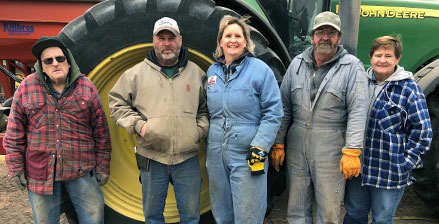
Regenerative Agriculture farmers team photo Anne grew up on a family farm and now runs a fourth-generation farm in Elgin, Nebraska, with her husband, brother-in-law and sister-in-law, farming corn, soybeans and alfalfa hay, and raising beef cattle.

Anne believes farmers have been stewards of the land from the beginning of time. But they’re also under pressure ‒ from the weather, ever more complex guidelines from government and environmental bodies, plus the underlying concern to stay viable and profitable. “Everything we do is about producing good quality food,” explains Anne, “and ensuring our son and his children can do the same.”

Instead of sweeping changes in agriculture, Anne favors a careful approach, tailored to each farm’s landscape and needs.

On her farm, the beef and grain sides of the business work in harmony through livestock integration. The cattle go out and clean up the corn stalks and fertilize the land.

They started no-till farming 20 years ago, taking cues from nature. Crop rotations between corn and soybeans add nutrients to the soil that the other crop needs, while alfalfa hay boosts nitrogen.

A regenerative approach can dovetail with profitability. Anne and her family save on fuel thanks to no-till. They also use less fertilizer, thanks to precise GPS imaging and soil sampling to pinpoint nutrient needs. A more exacting, efficient sprinkler system has reduced their water use significantly.

Sometimes the path isn’t clear. In Anne’s case, cover crops are a challenge with the short growing season in northern Nebraska. She believes financial incentives can help farms like hers make the switch.

 “We hope people value us farmers,” says Anne. “We all want the same thing – good healthy food and protected natural resources.”

Linkedin Facebook Instagram YouTube
Contact Worldwide
Privacy Notices Fraud Notice
Website Terms of Use Purchase Order Terms IRM
© 2026 Cargill, Incorporated. All Rights Reserved.