
skip to main content
Cargill Logo
Cargill
  • About Cargill

    About Cargill

    • Our approach
    • Cargill at a Glance
    • Executive Team
    • Innovation
    • 2025 Annual Report
    • Our History
    • Community Engagement
    • Research & Development
    • Diversity, Equity and Inclusion
    • Workplace Safety
    • Ethics & Compliance
    • Supplier Central
    • Contact Us
  • Our Stories
  • Products & Services

    Products & Services

    • Agriculture
    • Animal Nutrition
    • Beauty
    • Bioindustrial
    • Foodservice
    • Food & Beverage
    • Industrial
    • Pharmaceutical
    • Meat & Poultry
    • Risk Management
    • Supplements
    • Trade & Capital Markets
    • Transportation
  • Sustainability

    Sustainability

    • Supply Chains
    • Sustainability Priorities
    • 2025 Impact Report
    • Reporting Hub
  • News

    News

    • All Press Releases
    • Company Statements
    • In The News
    • Cargill Connection Newsletter
    • Cargill Subscribe
  • Careers
  • Contact
  • Worldwide
  • Contact
Home/ Products & Services/Bioindustrial/NatureWax/NatureWax Tips and Tricks
  • Bioindustrial
    • Bioindustrial Product Portfolio
    • All Brands
    • Adhesives and Sealants
      • Adhesives and Sealants Applications
        • Automotive Adhesives
        • Electronics
        • Structural Adhesives
      • Brands
    • Agrochemicals
    • Asphalt Solutions
      • Asphalt Anti-Strip
      • Asphalt Cold Mix Solutions
      • Asphalt Emulsifiers
      • Asphalt Modifier
      • Rejuvenators
      • Warm Mix Additives
    • Batteries
      • Batteries Applications
        • Battery Dispersants
      • Brands
    • Dielectric and Cooling
      • Dielectric and Cooling Applications
        • Dielectric Fluids
        • EV Cooling Fluids
      • Brands
      • In the News
    • Coatings
      • Coatings Applications
        • Paints
        • Automotive Coatings
        • Industrial, Marine and Protective Coatings
        • Inks
        • Stains Varnishes and Wood Coatings
      • Brands
    • Engineering Plastics
      • Engineering Plastics Applications
        • Polyurethane
        • Polyamide and polyimide
        • Polyester
      • Brands
    • Fermentation
      • Applications
      • Brands
      • Contact Us
    • Foams
    • Fuels
      • Brands
    • Lubricants
      • Lubricant Applications
        • Chain Oils
        • Compressors
        • Driveline and Transmission for EV
        • Driveline and Transmission
        • Engine Oils
        • Industrial Gear Oils
        • Industrial Greases
        • Stern Tubes
      • Brands
    • NatureWax
    • Polymer Additives
      • Polymer Additives Effects
        • Anti-block
        • Anti-fog
        • Anti-scratch
        • Static control
        • Mold Release
        • Plasticization
        • Processing Aids
        • Reactor Anti-fouling
        • Slip
        • Torque Release
      • Brands
      • Our Sustainability Efforts
    • Paper, Packaging & Textile
      • Applications
        • Corrugated
          • Product Solutions
          • Service and Equipment Solutions
        • Paper & Board Making
          • Product Solutions
          • Service and Equipment Solutions
      • Textiles
      • Brands
      • Meet with the stars for starch
      • Contact Us
    • Starches and Derivatives
      • Contact Us
      • Starches
      • Starch-derivatives
    • Tires and Rubbers
      • Extender Oils
    • Specialties
    • Vegetable Oils
    • Wood Paneling
 

Tips and tricks for making candles with Cargill™ NatureWax™

Better candle waxes for a brighter world

For more than 25 years, Cargill pioneered the use of plant-based waxes in candles. Today, we supply some of the most well-known brands in the world.

With Cargill™ NatureWax™, you'll get so much more, including the finest wax derived from renewable, plant-based resources, deep technical expertise and industry-leading product solutions. Not to mention more people aglow over the smooth appearance, longer burn time and exceptional fragrance throw of your candles.

Contact us


Watch & learn

In these videos we'll share how to create professional looking candles with tips from Cargill and our candle making experts.

Preheating the containers

Use these tips to avoid cracking and pull-away as the candle cools.

Selecting the right wick

Explore how the right candle wick can lessen issues like tunneling.

Fragrance load

Get tips on the amount of fragrance to add, as well as how to mix it into the wax.

The perfect pour

Learn how to prevent common issues like frosting and fat bloom.

The cooldown

Discover how to get the right cooling curve for the perfect candle.

Master candle quality

Stop candle tunneling and fat bloom: Expert tips for flawless candles

Notice white spots or streaks on your candles? That’s likely fat bloom—learn what causes it and how to fix it fast in this quick video. Watch now


Have uneven wax burn or excess wax around the edges? That’s candle tunneling—get expert tips to prevent and fix it so your candles burn beautifully. Learn more


Get started with NatureWax


Step 1: Prep your wax
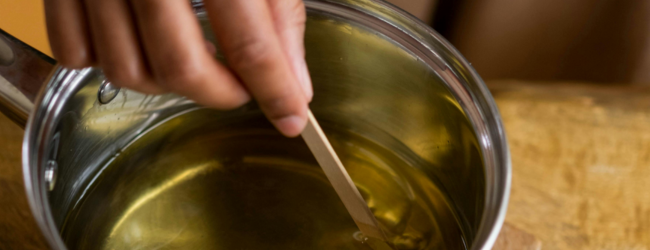
melted candle wax being stirred

Heat your NatureWax soy flakes to 160 degrees Fahrenheit (71 degrees Celcius). This is the optimal pouring temperature to ensure beautiful, even candles.

Step 2: Blend in fragrance oil
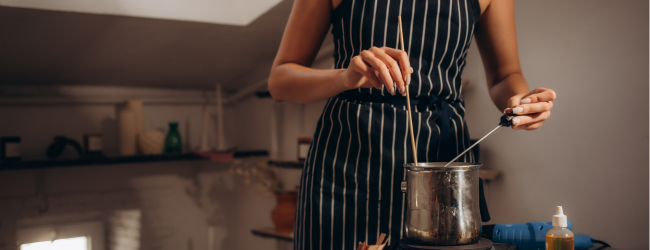
Adding fragrance to candle

If using fragrance, Cargill recommends a fragrance load (the percentage of fragrance added to the wax) of between 6 and 9 percent. For lighter scents, try blends at the higher end of that range. Pour the fragrance oil into your mixing container and slowly start to fold in the heated wax, mixing or stirring throughout the blending process to ensure the fragrance is bonded fully and completely to the wax. This can take about 5 minutes for a smaller batch of candles. 

If you aren't getting the wax appearance you want, try lowering the fragrance load and test at different amounts to find the perfect combination. Or try to fold in the wax over a longer or shorter period of time. Remember, this is art, not science!

Step 3: Master the pouring curve
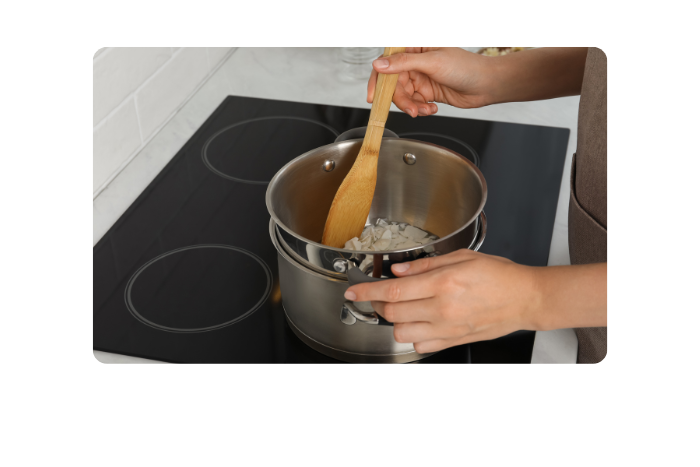
woman melting soy wax

Temperature matters: The perfect pouring temperature depends on your room temperature. Here's a guide:

Room temperature 70-80 degrees F (21-27 degrees C): Pour at 155-170 degrees F (68-77 degrees C)

Room temperature 80-90 degrees F (27-32 degrees C): Lower pouring temperature by 5-10 degrees F (2-5 degrees C)

Room temperature 60-70 degrees F (16-21 degrees C): Increase pouring temperature by 5-10 degrees F (2-5 degrees C)

Consider Candle size: Larger candles take longer to cool, so adjust your pouring temperature accordingly. For example, pour a 4-inch candle at 155 degrees F and a 3-inch candle at 160 degrees F.

Humidity matters: if you can't control the humidity in your workspace, adjust your pouring temperature during testing to find the optimal point. Change the temperature by 5 degrees F at a time to isolate the effect.


Step 4: Select the right wick

candle wick

Wick selection is important because if you don't get it right, you may see issues with burn time, flame height and fragrance throw. There are many different wicks to choose from. Consider the diameter of the candle, if you are using fragrance or not, and the type of wax you are using when selecting a wick. And test, test, test until you find the wick that's perfect for your candles.


Step 5: Preheat your containers
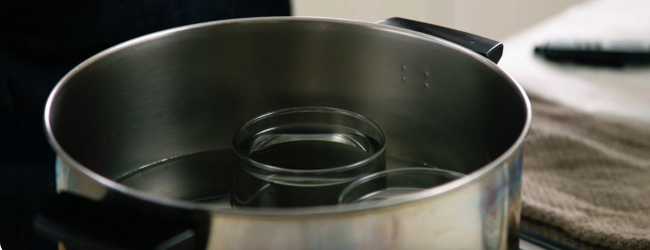
jars in hot water bath

Put your containers in a warm bath of water to get them slightly above room temperature, but not hot. This helps prevent cracking and the wax pulling away from the container as it cools.

Step 6: Pour with confidence

2 women pouring candle wax

Now you're ready to pour! Remember, this is just a starting point. Candle making is an art form with many different variables that impact the final candle, so experiment with different temperatures and test different techniques to find what works best for your candles.

Step 7: Let the candles cool

candles cooling

It usually takes at least 12 hours for candles to cure. Make sure the containers are spaced at least 2 inches apart to help them cool evenly. Also ensure that the ambient temperature and humidity of your room doesn't change during the cooling process. Cooling too fast or too slow can create problems with the appearance of the wax.


Discover more about NatureWax

Get answers to common questions, all in one place, from the expert source for your convenience.

Learn more

Choose wax based on desired features: candle type, packaging size, and regional availability.

Choose now

Access detailed NatureWax technical information, including ingredients, handling instructions, safety information, and additional resources.

Get datasheets

Contact local distributors in 18 countries that carry the premium NatureWax brand.

Find a distributor

Linkedin Facebook Instagram YouTube
Contact Worldwide
Privacy Notices Fraud Notice
Website Terms of Use Purchase Order Terms IRM
© 2026 Cargill, Incorporated. All Rights Reserved.